10 Things You Should Know Before Buying Motor Insurance in Kenya
Buying motor insurance is one of the most important financial decisions a vehicle owner in Kenya will make. It’s also a legal one. Chapter 405 of the Kenyan Traffic Act requires every vehicle on our roads to carry, at minimum, third-party insurance cover.
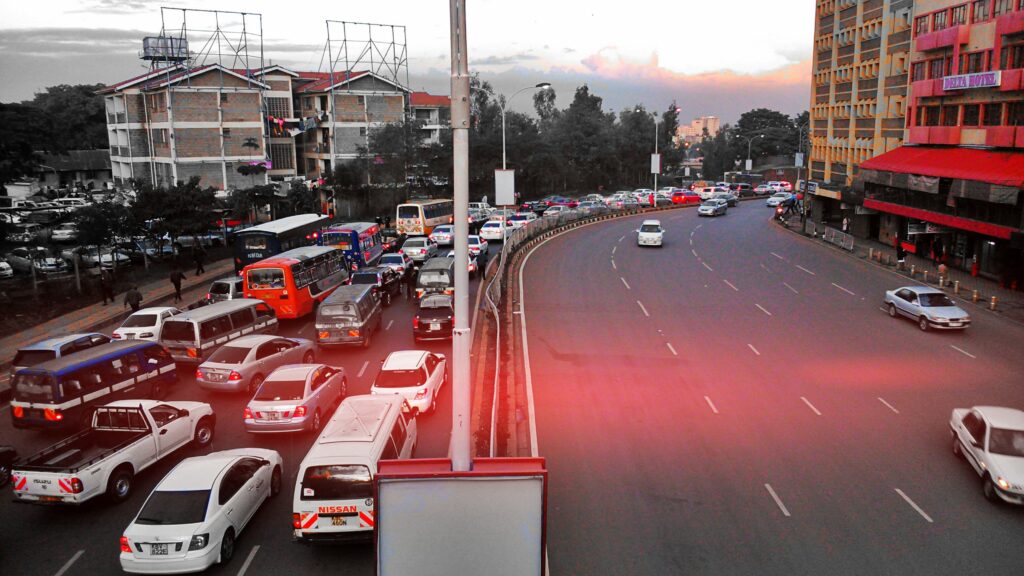
For most car owners, the hope is to never need that cover at all. But between the matatus, the “nduthis” weaving through traffic, and the potholes that seem to regenerate faster than KeNHA can fill them, Kenyan roads are unpredictable. According to a 2025 report from the National Transport and Safety Authority (NTSA), road fatalities in Kenya reached 4,458, which is an increase on the previous year. That single statistic is a reminder that a motor insurance policy isn’t paperwork you file away and forget; it’s the difference between a bad day and a financially devastating one.
The challenge is that motor insurance is not a one-size-fits-all product, and the cheapest policy on the market is rarely the best one. Understanding what’s covered, what’s excluded, how insurers calculate risk, and how claims actually get paid out can be the difference between a smooth experience after an accident and a costly, frustrating dispute.
Whether you’ve just bought your first car, are renewing an existing policy, or are simply comparing providers, this guide walks you through the ten things every Kenyan motorist should understand before signing a motor private insurance policy or a motor commercial insurance policy.
1. Understand the Different Types of Motor Insurance
Not all motor insurance is the same, and some of the terminologies that insurers use in their policies can be confusing if this is your first time buying cover. In Kenya, motor insurance generally falls into three categories:
Third-Party Only This is the legal minimum every driver must carry. It covers injury or damage you cause to other people, another driver, a pedestrian, someone else’s car or property. Importantly, it pays out nothing toward repairing or replacing your own vehicle, even if the accident wasn’t your fault and the other party can’t pay. It’s generally suited to older or lower-value vehicles, or owners who simply need to meet the legal requirement at the lowest possible cost. Also worth noting is that some companies will offer a third party as your only option, if your vehicle is less than KES 500, 000 in value or more than 15 years old.
Third-Party, Fire and Theft This builds on the basic third-party cover by adding protection if your own vehicle is stolen or destroyed by fire, which are two of the most common and costly losses a car owner can face. You still won’t be covered for accidental damage to your own car (say, from a collision), but you gain meaningful protection against two significant risks. This tier suits moderately valued vehicles where full comprehensive cover may not be justified, but the owner still wants more than the legal minimum.
Comprehensive Insurance As the name suggests, this is the broadest protection available, and the one most insurance advisors recommend for newer or higher-value vehicles. It typically includes:
- Accidental damage to your own vehicle
- Theft
- Fire
- Third-party liability (injury or damage to others)
- Natural perils, such as flooding
- Losses due to political violence and terrorism
- A range of optional add-on benefits (more on these in Point 8)
The right category for you depends on your vehicle’s value, your financial ability to absorb a loss out of pocket, and how much risk you’re comfortable carrying yourself. This is a conversation worth having with an advisor rather than a decision made on price alone.
2. Know What Determines Your Premium
Many first-time buyers assume insurers simply look at the car’s value and calculate a percentage. In reality, your premium is shaped by a combination of factors, including:
- Vehicle value – a more expensive car costs more to repair or replace.
- Vehicle type – some models are statistically more expensive to repair or more frequently targeted by thieves.
- Intended use – a private car and a commercial vehicle (used for business, ride-hailing, or transport) carry different risk profiles, and therefore different premiums.
- Driver profile – factors such as driving experience can influence risk assessment.
- Claims history – a driver or vehicle with a history of frequent claims is generally viewed as higher risk.
- Security features – trackers, alarms, and immobilizers can reduce your risk profile and, in some cases, your premium.
- Optional add-ons – covers such as an excess protector, political violence and terrorism cover, or loss of use will add to your premium but also broaden your protection.
Because so many variables are at play, two people insuring what looks like “the same car” can receive very different quotes. Understanding these factors helps you evaluate a quote intelligently, rather than simply comparing the final number.
3. Price Should Never Be Your Only Consideration
It’s tempting to choose the policy with the lowest premium, but a cheaper policy often achieves that lower price by quietly giving something up. It may come with:
- A higher excess (explained below) – meaning you pay more out of pocket before the insurer contributes anything.
- Fewer benefits included as standard.
- More exclusions written into the fine print.
- Slower or more limited claims support when you actually need it.
A quick note on “excess”: the excess is the fixed amount you agree to pay toward a claim before your insurer covers the rest. If your excess is KES 20,000 and a repair costs KES 100,000, you pay the first KES 20,000 and the insurer covers the remaining KES 80,000. A lower premium often hides a higher excess – so the “cheaper” policy may actually cost you more the moment you need to use it.
When comparing insurers, it’s worth looking beyond the premium to their:
- Reputation for paying claims fairly and promptly – how quickly and consistently they’ve actually settled claims in the past, not just what they promise upfront.
- Quality of customer support – how easy it is to reach someone and get a straight answer, especially when you’re stressed after an accident.
- Network of approved repair garages – a wider, better-vetted network means faster repairs and more consistent workmanship on your car.
- Range of additional benefits – the optional covers available to you if your needs change (see Point 8).
- Financial stability – an insurer that struggles financially may struggle to pay claims, no matter how good their policy wording looks on paper.
4. Read the Policy Exclusions Carefully
An exclusion is simply something your policy explicitly does not cover. A surprising number of claim disputes happen simply because a policyholder never read this section. Common exclusions in Kenyan motor policies include:
- Driving under the influence of alcohol or drugs – insurance is designed to cover accidental, unforeseen loss. Driving while impaired is a deliberate breach of road safety law, so insurers treat any resulting accident as self-inflicted risk rather than genuine misfortune.
- An accident involving a driver not named or authorized on the policy – your premium is calculated based on the risk profile of the specific, named driver(s). Letting an unlisted person drive changes that risk profile without the insurer’s knowledge or consent, which is why standard policy wording (in line with the Insurance (Motor Vehicles Third Party Risks) Act, Cap. 405) ties cover to an authorized driver.
- Mechanical breakdown (insurance covers accidents, not wear-and-tear failures) – a breakdown is a maintenance issue, not an insurable accident. Covering it would effectively make insurers responsible for servicing every car they insure.
- General wear and tear on the vehicle – insurance protects against sudden, unexpected loss, not the gradual, predictable aging of a vehicle over time.
- Racing or other illegal driving activities – racing dramatically increases the likelihood of an accident, which is why most private motor policies explicitly exclude cover “for racing, competitions, rallies or trials,” as reflected in standard IRA-approved policy schedules.
- Vehicle modifications that were never reported to the insurer – modifications (performance upgrades, altered engines, non-standard parts) can change how a car behaves and how expensive it is to repair. Insurers price your policy based on the vehicle as originally specified, so undeclared changes fall outside what they agreed to cover.
None of these exclusions are unusual or unfair, they exist in most policies, from most insurers, for the reasons above. The point isn’t to alarm you, but to encourage you to actually read this section before you sign, so there are no surprises if you ever need to make a claim.
5. Choose the Right Cover for Your Situation
There’s no universally “best” policy, only the policy that best fits your circumstances. A few examples of how this plays out in practice:
- A brand-new family SUV, still worth most of its purchase price, is usually a strong candidate for comprehensive cover – the cost of a full repair or replacement would be significant.
- An older vehicle with a low market value may not justify the added premium of comprehensive cover; third-party (or third-party, fire and theft) may be more sensible.
- A commercial vehicle – one used for business, deliveries, or ride-hailing – typically needs specialized cover designed for that higher-risk use, rather than a standard private policy.
The guiding question isn’t “what’s the cheapest option?” but “what level of financial risk am I comfortable carrying myself if something goes wrong?”
6. Understand the Claims Process Before an Accident Happens
The middle of a stressful roadside situation is not the time to learn how your claims process works. Knowing the steps in advance helps you act quickly and avoid delays. In general, after an accident you should:
- Make sure everyone involved is safe first – this always comes before anything insurance-related.
- Notify the police where the law requires it, and obtain an abstract report if needed.
- Inform your insurer or insurance advisor as soon as possible – most policies require prompt notification.
- Take photographs of the scene, the vehicles involved, and any visible damage.
- Collect the names and contact details of any witnesses.
- Complete your insurer’s claim forms accurately and fully.
- Arrange for your vehicle to be assessed by the insurer’s appointed assessor.
- Wait for approval before authorizing any repairs – repairing the car before your insurer has assessed it can complicate or even invalidate your claim.
Being prepared for these steps, and having your advisor’s number saved can significantly shorten the time between an accident and a resolved claim.
7. Know Which Documents You’ll Need
Having the right paperwork ready before you approach an insurer speeds up the entire process, whether you’re buying a new policy or filing a claim. Typically, you’ll need:
- National ID
- KRA PIN
- Vehicle logbook
- A valuation report, where applicable (usually for comprehensive cover on higher-value vehicles)
- Details of your previous insurance policy, if you’re switching insurers
- A valid driver’s licence
Keeping digital copies of these on your phone, in addition to the originals, is a simple habit that can save real time when it matters.
8. Consider Optional Benefits
Beyond the core cover, most insurers offer optional add-ons that policyholders often don’t ask about, sometimes to their regret later. These include:
- Excess Protector – reduces or waives the excess amount you’d otherwise pay on a claim. Example: if your vehicle is valued at KES 2,000,000, your excess on a claim is typically calculated at around 2.5% of the vehicle’s value, in this case, KES 50,000. If you’d purchased an excess protector and your claim comes to KES 120,000, the insurer covers the full amount. Without the excess protector, you’d pay the first KES 50,000 yourself, and the insurer would cover the remaining KES 70,000.
- Courtesy Car – provides you with a temporary vehicle while yours is being repaired.
Example: your car is in the garage for two weeks after an accident. Without this cover, you’d need to arrange and pay for your own transport during that time. With it, the insurer provides a replacement vehicle so your daily routine isn’t disrupted.
- Political Violence and Terrorism (PVT) cover – protects against damage arising from riots, civil unrest, or terrorism, which standard comprehensive cover often excludes.
Example: if your car is damaged during a protest or riot, a standard comprehensive policy may reject the claim outright, since civil unrest typically falls outside normal accidental damage cover. With PVT cover added, that specific cause of damage is covered.
- Windscreen Cover – pays for windscreen repair or replacement, a surprisingly common and often separately-priced claim.
Example: a stone chip cracks your windscreen on the highway. Without windscreen cover, this may either not be covered at all or may be paid out of your standard excess; with it, replacement is handled with a separate, usually much smaller, cost to you.
- Entertainment Equipment Cover – protects installed audio, infotainment, or similar equipment.
Example: an installed sound system or infotainment unit is damaged or stolen along with the vehicle. Standard comprehensive cover may value this at a generic estimate; this add-on ensures the actual installed equipment is properly accounted for.
- Loss of Use – provides compensation for the time your vehicle is off the road following an insured event.
Example: if you rely on your car for business (deliveries, ride-hailing, client visits) and it’s off the road for repairs, this benefit compensates you for the income or use you lose during that downtime, separate from the repair cost itself.
- Personal Accident Benefits – provides a benefit to you or your passengers in the event of injury.
Example: if you or a passenger is injured in an accident, this pays out a defined benefit amount directly to the injured party, in addition to whatever the vehicle-damage side of the claim covers.
None of these are mandatory, and not everyone needs all of them. At Aviva Insurance Agency, we’ll use our expertise to help you make a deliberate choice about what to include, rather than discovering a gap in your cover after it’s too late.
9. Review Your Insurance Every Year
A policy that made sense two years ago may no longer be the right fit today. It’s worth reviewing your cover whenever:
You purchase another vehicle – Adding a vehicle to your household is a natural point to review your entire insurance arrangement, not just to add the new car, but to check whether combining policies with one insurer works out better than running separate ones, and whether your existing cover still makes sense alongside the new addition.
Your vehicle’s value has depreciated significantly – This is one of the most overlooked reviews, and one of the most costly to skip. In the event of an accident, your insurer will pay out based on your vehicle’s pre-accident market value, not the value you originally insured it for. If you insured your car three years ago and never updated that value, you could be significantly underpaid relative to what you assumed your cover, and your premium, were based on.
It’s important to get your vehicle valued frequently (many insurers require or recommend this periodically); an updated valuation not only ensures a fair payout if you ever claim, but can also reduce the premium you pay, since you’re no longer insuring the vehicle for more than it’s actually worth.
Your driving habits or usage patterns change – If you’ve started driving significantly more or less, changed routes, or your car now sits in a different area overnight, these details can all factor into your risk profile — and an updated policy can reflect that accurately rather than being based on outdated assumptions.
You begin using a previously private vehicle for commercial purposes – This is an important one to flag proactively. If you start using your personal car for ride-hailing, deliveries, or business use without updating your policy, you risk a claim being rejected outright. This is because it was insured, and priced, as a private vehicle, not a commercial one.
Your insurer introduces new products or benefits worth considering – Insurers periodically update their offerings, sometimes with improved add-ons, faster claims processes, or better pricing structures. Reviewing your policy annually is a natural opportunity to check whether something better has become available since you last signed up.
An annual review, ideally at renewal time, is a simple habit that keeps your cover matched to your actual circumstances, rather than to whatever you signed up for years ago.
10 Work With Us
Buying directly from a single insurer means you only ever see that one insurer’s products, priced and structured in their favor. As an independent insurance agency, AIVA works across multiple insurers on your behalf and will:
- Compare policies from several insurers side by side
- Explain the practical differences between covers in plain language
- Recommend the option best suited to your specific circumstances, not a fixed product line
- Support you through the claims process itself
- Review your policy at renewal, rather than letting it auto-renew unchanged
This is the core of what AIVA Insurance Agency does. As an independent broker, our role isn’t to sell you a specific insurer’s policy, it’s to help you compare your options objectively and choose the cover that genuinely fits your needs and budget.
Frequently Asked Questions
Is motor insurance compulsory in Kenya? Yes. Every motor vehicle operating on public roads must carry, at minimum, third-party insurance cover, as required under the Traffic Act.
Which is better: Third-Party or Comprehensive cover? Neither is universally “better”, the right choice depends on your vehicle’s value, your financial circumstances, and how much risk you’re willing to carry yourself.
Can I switch insurers at renewal? Yes. Renewal is an ideal opportunity to compare policies afresh and choose the option that best suits your current needs, rather than automatically renewing your existing cover.
What happens if I make a claim? Your insurer will assess the circumstances, verify your documentation, inspect the vehicle where necessary, and determine the outcome according to the terms of your policy.
Takeaway
At Aiva, our goal isn’t simply to sell you a policy, it’s to help you make an informed decision that protects you, your family, and your business.
Ready to compare motor insurance options? Whether you’re insuring your first vehicle, renewing an existing policy, or looking for better value, request a free consultation or quotation or fill the form below today, and let our advisors help you choose the cover that’s right for you.
Quick Takeaways
- Motor insurance is a legal requirement for every vehicle on Kenyan roads.
- Third-party cover meets the legal minimum but protects you against very little.
- Comprehensive cover offers far broader financial protection, at a higher premium.
- Your premium is shaped by more than just your car’s value.
- Understanding exclusions matters as much as understanding what’s covered.
- A well-documented claim, filed correctly and promptly, is a smooth claim.
- An independent insurance agency gives you options. On the other hand, a single insurer only gives you their product.